
Call: 08071779477
 Send Inquiry
 Send Inquiry
Fruit Hardness Tester
Price 30000 INR/ Perch
MOQ : 1 Piece
Fruit Hardness Tester Specification
- Temperature
- 5°C to 35°C
- Accuracy
- ±0.1 kg/cm²
- Resolution
- 0.01 kg/cm²
- Usage
- Furit Hardnes Tester
- Hardness
- 2 to 15 kg/cm²
- Test Range
- 2 to 15 kg/cm²
- Mounting Type
- Handheld
- Application
- Fruit Ripeness Testing
- Number of Specimens
- 1
- Features
- Portable, Lightweight, Easy operation
- Frequency
- 50Hz
- Operating Voltage
- 220V
- Port Size
- Standard
- Equipment Type
- Mechanical Penetrometer
- Specimen Size
- Up to 100 mm diameter
- Automation Grade
- Manual
- Response Time
- Instantaneous
- Display Type
- Analog Gauge
- Measuring Range
- 2-15 kg/cm²
- Humidity
- 80% RH max (non-condensing)
- Max Height
- 200 mm
- Power Supply
- 220V AC, 50Hz
- Capacity
- 15 kg/cm²
- Machine Weight
- 3 kg
- Test Speed
- 60 mm/min
- Test Width
- 80 mm
- Test Stroke
- 70 mm
- Control Mode
- Manual
- Dimension
- 300 mm x 120 mm x 80 mm
- Calibration
- Calibration Certificate Provided
- Included Probes
- 3 sizes (for different fruit types)
- Operating Principle
- Plunger Penetration
- Housing Material
- Aluminum Alloy
- Compliance
- ISI Standard
- Finish
- Powder Coated
Fruit Hardness Tester Trade Information
- Minimum Order Quantity
- 1 Piece
- FOB Port
- Chennai
- Payment Terms
- Cash Advance (CA), Cash in Advance (CID)
- Delivery Time
- 1 Days
- Main Domestic Market
- Andaman and Nicobar Islands, Pondicherry, Daman and Diu, Chandigarh, Delhi, Dadra and Nagar Haveli, Gujarat, Goa, Haryana, Himachal Pradesh, Jammu and Kashmir, Jharkhand, Karnataka, Kerala, Madhya Pradesh, Maharashtra, Mizoram, Meghalaya, Manipur, Nagaland, Punjab, Rajasthan, Sikkim, Tamil Nadu, Telangana, Tripura, Uttarakhand, West Bengal, South India, Central India, North India, East India, West India, Andhra Pradesh, Assam, Arunachal Pradesh, Bihar, Chhattisgarh, Lakshadweep, Uttar Pradesh, Odisha, All India
About Fruit Hardness Tester
Fruit Hardness Tester
- Fruit hardness tester or Fruit Penetrometer: used to measure the hardness of apples, pears, watermelons, bananas and other fruits, to determine the maturity of fruits, to cultivate good varieties, picking time, processing time, harvest storage, export transportation and other reasonable control of time.
- It is suitable for fruit research departments, fruit farms, fruit companies, universities and other units. The instrument is small in size, light in weight, intuitive in numerical display and easy to carry. It is suitable for fruit inspection in various fruit venues.
- It can also be assembled on a special test stand, which can improve the accuracy of testing and is suitable for professional testing departments.
- Fruit Penetrometer Hardness Tester Soft and hard fruit both can be measured with FP-503
Terminology:
- Fruit firmness (P) refers to the ratio of fruit unit area (S) to the pressure(N) of the pressure spring under test.
- P=N/S
- P Fruit hardness (10 5 Pa or kg/cm2)
- N Force exerted by a force-measuring spring on the fruit surface(N or kg)
- S Fruit area of thrust surface (cm2)
Using Steps:
- Before measurement: Turn the dial to align the drive pointer with the first calibration line of the dial ( calibration line 0.5) Peel the fruit about 1 cm2 .
- Measurement: Hold the hardness tester in hand, make the hardness tester perpendicular to the surface of the fruit under test, press the test head into the fruit evenly, then drive the pointer to start driving the indicator to rotate,
- When the test head stops at the scale line (10mm) the reading indicated by the indicator is the hardness of the fruit, and the average value is taken three times.
- After measurement: Rotate the knob to reset the pointer to the initial calibration line.
Precision Fruit Ripeness Evaluation
This tester enables accurate determination of fruit hardness, essential for producers and distributors aiming to guarantee optimal ripeness. Its instant analog display and fine resolution simplify quality control, delivering consistent measurements for each specimen up to 100 mm in diameter.
Robust Design and Easy Operation
Constructed from powder-coated aluminum alloy, the instrument is lightweight for handheld use and durable for frequent testing environments. Simple manual control and interchangeable probes allow effective testing of various fruits without technical complexity.
FAQs of Fruit Hardness Tester:
Q: How is the Fruit Hardness Tester operated for measuring fruit ripeness?
A: The Fruit Hardness Tester is operated manually using a plunger penetration principle. After selecting the appropriate probe size for the fruit type, the user gently presses the probe into the sample. The analog gauge instantly displays the hardness value, indicating ripeness.Q: What types of fruits can be tested using this equipment?
A: This tester includes three different probe sizes, making it suitable for a wide range of fruit types and sizes. Specimens up to 100 mm in diameter can be measured, accommodating various fruits commonly grown or distributed in India.Q: When should calibration be performed and how is it ensured?
A: Calibration is recommended before initial use and periodically to maintain measurement accuracy. Each Fruit Hardness Tester is supplied with a calibration certificate, verifying its precision per ISI standards.Q: Where can the Fruit Hardness Tester be used?
A: The tester is portable and can be used in production facilities, farms, laboratories, trading centers, or retail environments. Its lightweight design allows for easy transportation and handheld use in multiple settings.Q: What is the process for changing probe sizes to test different fruits?
A: To test different fruits, simply remove the current probe and attach the required size, which can be done without tools. Each probe is designed to fit securely, ensuring reliable measurement for each fruit type.Q: What are the main benefits of using this Fruit Hardness Tester?
A: The main benefits include instant and accurate hardness readings, easy manual operation, portability, compliance with ISI standards, and suitability for multiple fruit types. This allows users to efficiently assess fruit ripeness with minimal training or setup.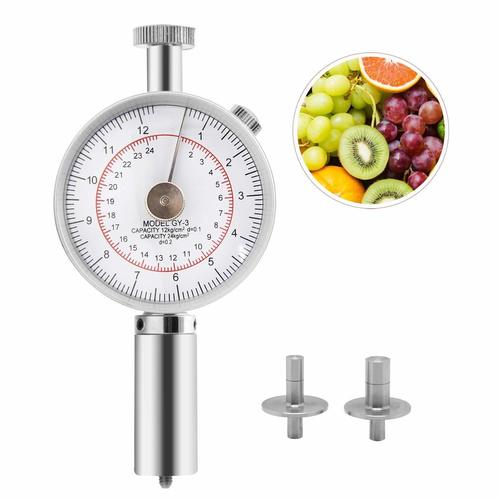
Tell us about your requirement

Price:
Quantity
Select Unit
- 50
- 100
- 200
- 250
- 500
- 1000+
Additional detail
Mobile number
Email

More Products in Agriculture Equipment Category
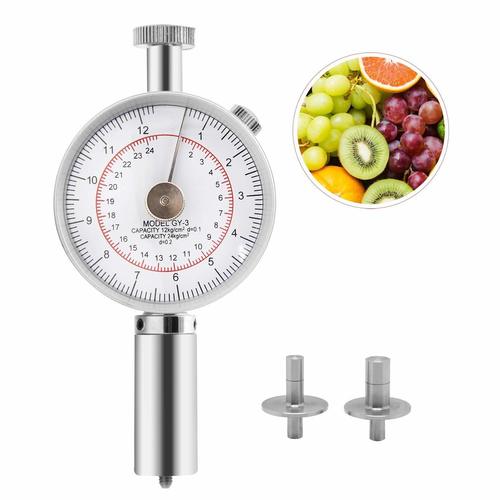
Fruit Penetrometer
Price 33000 INR / Piece
Minimum Order Quantity : 1 Piece
Usage : Hardness & Soft Test
Machine Weight : 1.4 kg
Power Supply : Not Required (Manual)
Test Speed : Manual operation
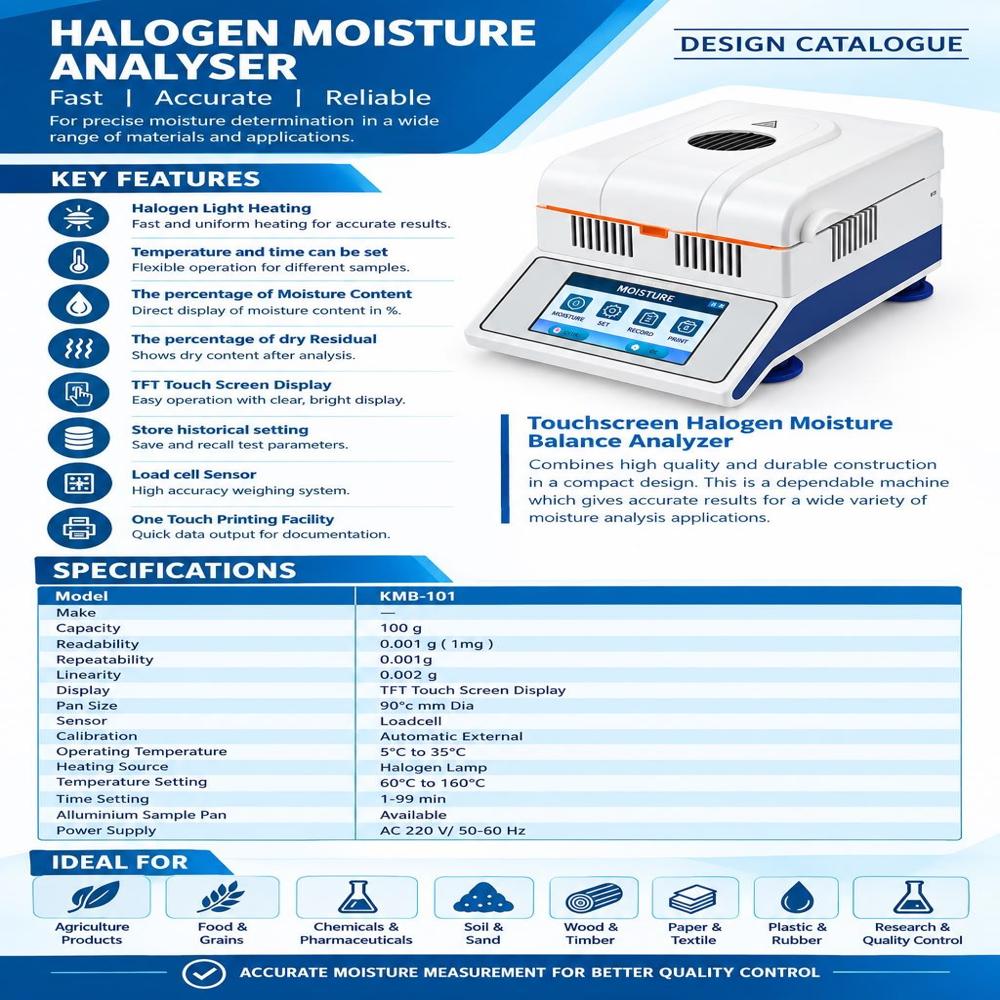
Digital Moisture Analyser
Price 50000.0 INR / Piece
Minimum Order Quantity : 1 Piece
Usage : Moisture Test
Machine Weight : 5 Kilograms (kg)
Power Supply : Electric
Test Speed : No
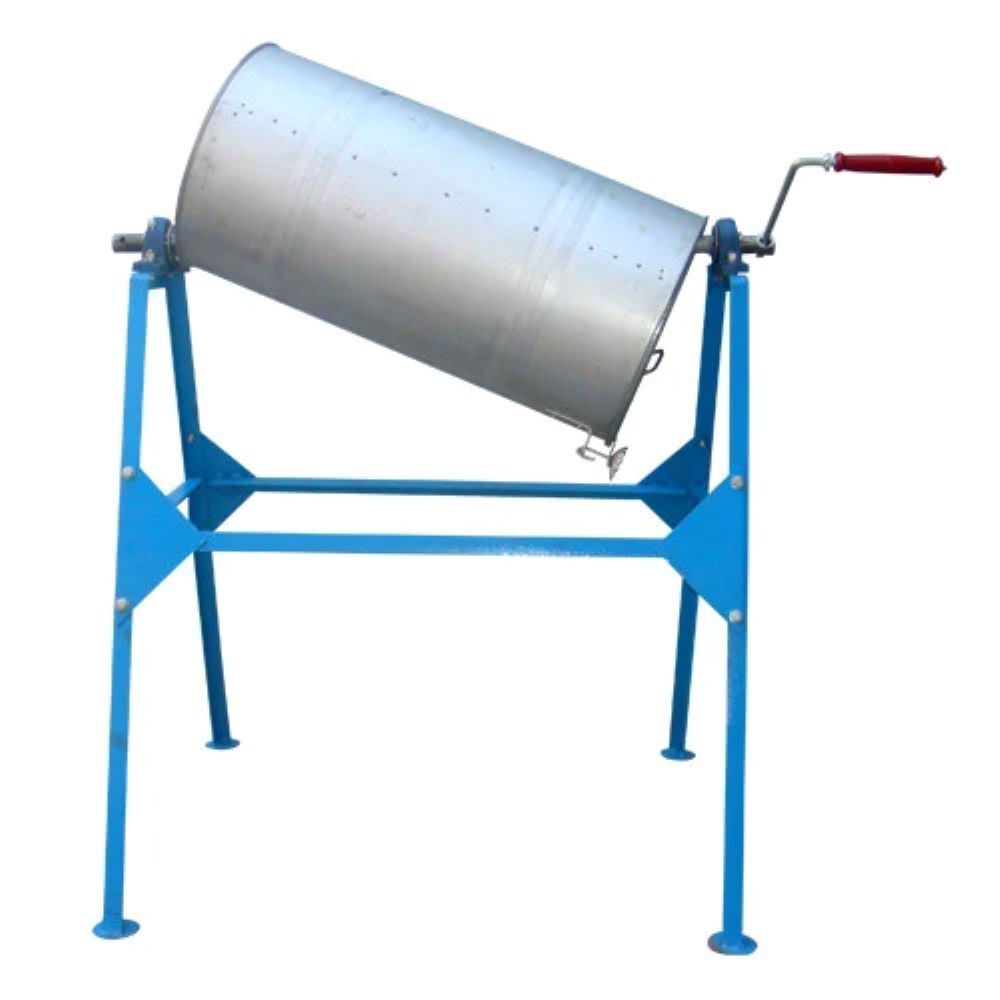
Seed Dressing Drum
Price 8500 INR / Piece
Minimum Order Quantity : 1 Piece
Usage : Industrial
Machine Weight : 20 Kilograms (kg)
Power Supply : Manual
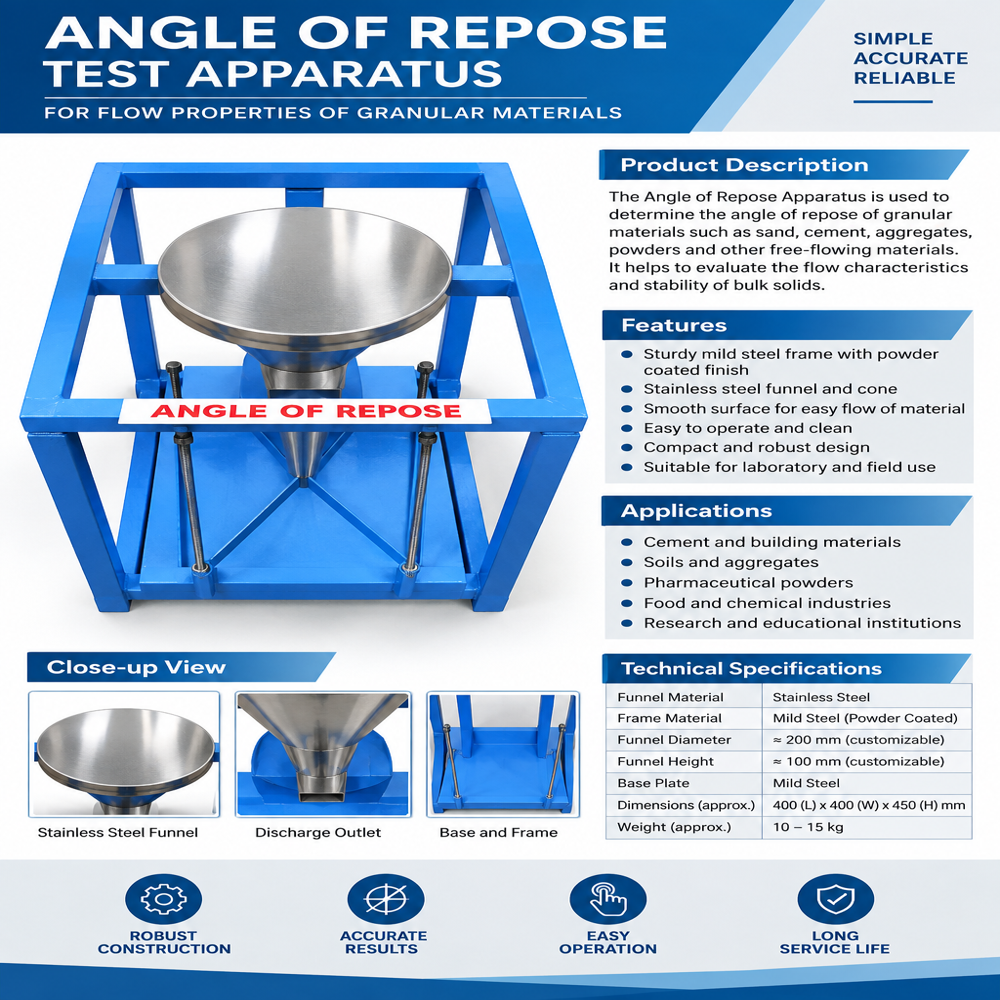
Angle of Repose
Price 25000.0 INR / Piece
Minimum Order Quantity : 1 Piece
Usage : Educational Lab
Machine Weight : 10 Kilograms (kg)
Power Supply : No
Test Speed : 2

Contact Details
GST : 33AYHPP7230N1Z2
- New No:243/2, Old No:203/2, Periyar Paathai, Chennai - 600094, Tamil Nadu, India
- Phone :08071779477

 Send Inquiry
Developed and Managed by Infocom Network Private Limited.
