
Call: 08071779477
 Send Inquiry
 Send Inquiry
Triaxial Shear Test Apparatus
Price 95500.00 INR/ Piece
MOQ : 1 Piece
Triaxial Shear Test Apparatus Specification
- Accuracy
- ±0.01 mm
- Speed Range
- 0.00001 to 9.99999 mm/min (variable)
- Shape
- Rectangular Base with Cylindrical Chamber
- Temperature Resistance
- Up to 80°C
- Glass Type
- Borosilicate Glass for Pressure Cell
- Control Type
- Digital/Manual
- Display Type
- Digital Display for Load and Displacement
- Features
- Corrosion resistant, Rigid construction, Easy operation, Leak-proof cylinder, Precise measurements
- Power Supply
- AC 220 V, 50/60 Hz
- Type
- Manual/Automatic Triaxial Shear Test Apparatus
- Dimension (L*W*H)
- 620 mm x 450 mm x 1000 mm (approx.)
- Equipment Type
- Laboratory Soil Testing Apparatus
- Equipment Materials
- Stainless Steel, Mild Steel, and Borosilicate Glass Cylinder
- Power
- 220V AC, 50 Hz
- Voltage
- 220 V
- Material
- Stainless Steel, MS with glass components
- Application
- Soil Mechanics, Geotechnical Engineering Testing
- Capacity (Ltr)
- as required/standard sizes
- Ambient Operating Temperature
- 5C to 40C
- Pressure Range
- Up to 10 kg/cm2 (1000 kPa)
- Drainage System
- Fitted with Burettes and Valves
- Compliance Standards
- IS 2720, ASTM D2850, BS 1377
- Max Axial Load Capacity
- 50 kN (customizable)
- Platen Diameter
- 38 mm/50 mm/100 mm (as per specimen size)
- Water Reservoir Capacity
- 1 to 2 Litres
- Test Types
- UU (Unconsolidated Undrained), CU (Consolidated Undrained), CD (Consolidated Drained)
- Accessories Included
- Latex Membranes, Porous Stones, Filter Papers, Rubber O-rings, Sample Splitters
- Safety Features
- Overload protection, Emergency stop
- Finish
- Powder Coated / Polished
- Displacement Measurement
- Dial Gauge/Digital Displacement Sensor
- Loading Frame
- Two-column with adjustable crosshead
- Specimen Height
- 76 mm (standard), customizable
- Load Measurement
- Proving Ring/Load Cell (Digital Optional)
Triaxial Shear Test Apparatus Trade Information
- Minimum Order Quantity
- 1 Piece
- FOB Port
- Chennai
- Supply Ability
- 100 Pieces Per Month
- Delivery Time
- 1 Days
- Main Domestic Market
- Chandigarh, Himachal Pradesh, Manipur, Andaman and Nicobar Islands, Uttarakhand, South India, East India, West India, Assam, Arunachal Pradesh, Bihar, Daman and Diu, Goa, Haryana, Jammu and Kashmir, Jharkhand, Karnataka, Kerala, Madhya Pradesh, Maharashtra, Mizoram, Meghalaya, Nagaland, Odisha, Punjab, Pondicherry, Rajasthan, Sikkim, Tamil Nadu, Telangana, Tripura, West Bengal, Dadra and Nagar Haveli, Lakshadweep, Uttar Pradesh, Delhi, Gujarat, North India, Andhra Pradesh, Central India, Chhattisgarh, All India
Triaxial Shear Test Apparatus About
Leveraging on our years of experience, we hold expertise in offering Triaxial Shear Test Apparatus to our respected customers. Provided apparatus are mainly used for measuring the mechanical properties of soil and granular materials. These apparatus are known for their features like low maintenance, study construction and easy operation. In order to offer perfect apparatus to our valued customers, it is examined under the guidance of quality controllers. Furthermore, our valued customer can avail this Triaxial Shear Test Apparatus from us market leading prices.
Versatile Specimen Handling
This apparatus can accommodate specimens of varying diameters (38 mm, 50 mm, or 100 mm), making it ideal for different site and research requirements. The adjustable loading frame and customizable specimen height offer flexibility for a wide range of soil types and testing conditions. High-grade materials and a rigid construction guarantee durability and consistency even during extensive testing cycles.
Advanced Control and Measurement
Featuring both manual and digital control options, the system offers precise load and displacement measurement through a Proving Ring, Load Cell, Dial Gauge, or Digital Displacement Sensor. The digital display provides instant, accurate readings, making data collection straightforward and efficient. Safety measures like overload protection and emergency stop are integrated for secure laboratory operation.
Comprehensive Compliance and Accessories
Suitable for soil mechanics and geotechnical engineering laboratories, the device adheres to major international standards (IS 2720, ASTM D2850, BS 1377). Supplied with all necessary accessoriesincluding latex membranes, porous stones, filter papers, O-rings, and sample splittersit is ready for immediate use. Its corrosion-resistant finish and leak-proof chamber ensure longevity and reliable performance.
FAQs of Triaxial Shear Test Apparatus:
Q: How does the Triaxial Shear Test Apparatus operate for different soil tests?
A: The apparatus supports Unconsolidated Undrained (UU), Consolidated Undrained (CU), and Consolidated Drained (CD) triaxial shear tests. Simply select the desired test type, prepare the specimen according to standard dimensions, and use the provided accessories for sample insertion. The systems adjustable components allow for fine-tuning based on your specific soil and analysis needs.Q: What is the maximum load and pressure capacity of this apparatus?
A: This apparatus can apply an axial load of up to 50 kN, adjustable based on experimental requirements. The pressure range in the triaxial cell reaches up to 10 kg/cm (1000 kPa), making it suitable for various soil strengths and test scenarios.Q: When should I choose manual or automatic control modes?
A: Manual mode is ideal for tests requiring hands-on adjustment and flexibility, while automatic (digital) control offers greater automation, consistency, and precise measurement, especially for repetitive or research-intensive applications. The choice depends on laboratory preferences and the complexity of the testing programs.Q: Where can the Triaxial Shear Test Apparatus be used?
A: This equipment is primarily used in geotechnical engineering and soil mechanics laboratories for both academic and commercial purposes. It is suitable for research institutions, construction companies, soil testing laboratories, and quality assurance departments operating within the ambient temperature range of 5C to 40C.Q: What benefits does the apparatus offer in terms of measurement accuracy and operation?
A: Equipped with a digital display, variable speed control (0.00001 to 9.99999 mm/min), and high-accuracy (0.01 mm) sensors, the apparatus ensures precise and reproducible measurement of load and displacement. Features such as overload protection, corrosion-resistant construction, and an easy-to-operate interface further enhance usability and reliability.Q: How do I maintain the apparatus for optimal performance?
A: Regularly clean the specimen chamber and accessories, ensure the integrity of water-tight seals, and visually inspect for any corrosion or damage. Use only compatible electrical supplies (220V AC, 50 Hz) and avoid exposing the apparatus to temperatures above 80C. Refer to the user manual for routine calibration and maintenance instructions.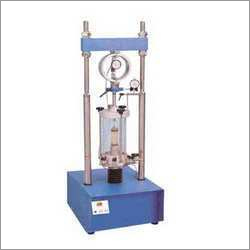
Tell us about your requirement

Price:
Quantity
Select Unit
- 50
- 100
- 200
- 250
- 500
- 1000+
Additional detail
Mobile number
Email

More Products in Soil Testing Laboratory Equipment Category
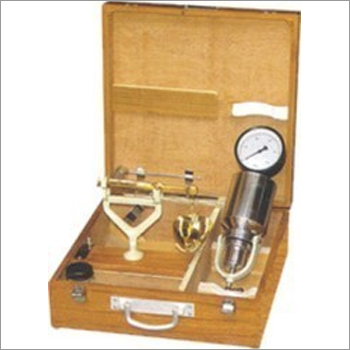
Rapid Moisture Meter
Price 4000 INR / Piece
Minimum Order Quantity : 1 Piece
Warranty : 1 Year
Material : Stainless Steel
Application : Soil Testing
Usage : Laboratory
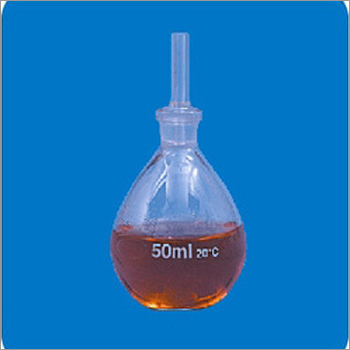
Specific Gravity Density Bottle
Price 200 INR / Piece
Minimum Order Quantity : 1 Piece
Warranty : 1 year
Material : Glass
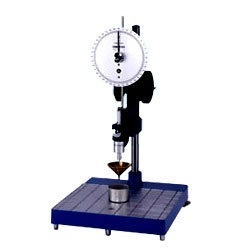
Grease Penetrometer
Price 9500 INR / Piece
Minimum Order Quantity : 1 Piece
Warranty : 1 year
Usage : Soil Penetration Test
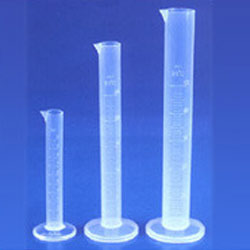
Measuring Jar
Price 55 INR / Piece
Minimum Order Quantity : 1 Piece
Material : Borosil
Application : Lab

Contact Details
GST : 33AYHPP7230N1Z2
- New No:243/2, Old No:203/2, Periyar Paathai, Chennai - 600094, Tamil Nadu, India
- Phone :08071779477

 Send Inquiry
Developed and Managed by Infocom Network Private Limited.
