
Call: 08071779477
 Send Inquiry
 Send Inquiry
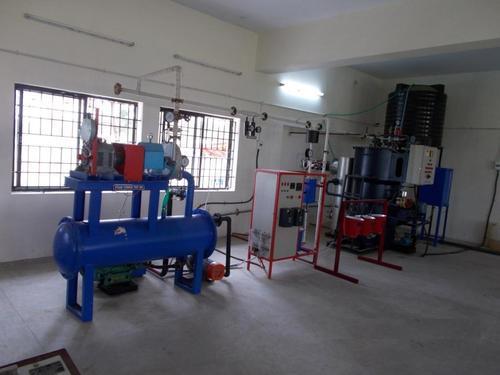
Theory of Machine Lab Equipment
Price 32000 INR/ Piece
MOQ : 1 Piece
Theory of Machine Lab Equipment Specification
- Material
- Mild Steel
- Color
- Blue Black
- Voltage
- 220 Volt (v)
- Power Supply
- Electric
- Mounting Type
- Floor Mounting
- Usage
- Laboratory
- Frequency
- 50/60 Hertz (HZ)
Theory of Machine Lab Equipment Trade Information
- Minimum Order Quantity
- 1 Piece
- FOB Port
- Chennai
- Delivery Time
- 2 Week
- Main Domestic Market
- Assam, Dadra and Nagar Haveli, Chandigarh, Himachal Pradesh, Uttarakhand, Daman and Diu, Lakshadweep, South India, East India, West India, Andaman and Nicobar Islands, Arunachal Pradesh, Bihar, Delhi, Gujarat, Goa, Jammu and Kashmir, Jharkhand, Karnataka, Maharashtra, Mizoram, Meghalaya, Manipur, Nagaland, Punjab, Pondicherry, Rajasthan, Sikkim, Tamil Nadu, Telangana, Tripura, West Bengal, Haryana, Uttar Pradesh, Madhya Pradesh, North India, Andhra Pradesh, Kerala, Central India, Odisha, Chhattisgarh, All India
About Theory of Machine Lab Equipment
DYNAMICS LABORATORY- Tachometer - Contact And Non Contact Type
- Analogue Type Tachometer
- Digital Tachometers
- Stroboscopes
- Vibrations Pickups, Accelerometers And Recorders
- Acceleratometers Using Piezo Electric Systems
- Slider Cranck, Cranck Rocker Mechanisms
- Models Of Universal Joint-Single & Double
- Skotch Yoke Machines
- Differential And Worm Wheel Reducers
- Enlarged Gear Models
- Spur Gear Trains -Model
- Epicycle Gear Trains -Model
- Differential Mechanisms -Model
- For Determination Of Mass Movement Interia Connecting Rod And Fly Wheel
- Turn Table Apparatus
- Bifilar Suspension
- Compound Pendulum Setup
- Motorized Gyroscope
- Gear Reducer - Model Of Gear Box
- Governors -Watt, Porter, Propel, And Hart Nell
- Cam And Follower Set Pump With Motor
- Whirling Of Shaft Apparatus
- Spring Mass System -Model
- Vibrating Table
- Cantilever Beam Setup
- Free - Free Beam Setup
- Dynamic Balancing Setup -Reciprocating And Rotating
- Electro Pneumatic Circuit Model Consisting Of Cylinder, Directions Control Valve, Limit Switches.
Robust Design for Laboratories
Made with high-quality mild steel and finished in blue-black, the Theory of Machine Lab Equipment ensures long-term stability and resistance to wear. Its floor mounting type offers secure placement and ease of use, making it suitable for a variety of laboratory environments across schools, colleges, and industrial labs.
Flexible Electric Power Compatibility
Operating smoothly on a 220 Volt power supply and compatible with both 50 Hz and 60 Hz frequencies, this lab equipment integrates seamlessly into standard Indian electrical systems. This adaptability promotes hassle-free installation and reliable operation during experiments and instructional demonstrations.
FAQs of Theory of Machine Lab Equipment:
Q: How is the Theory of Machine Lab Equipment installed in a laboratory?
A: The equipment is designed for floor mounting, which provides a secure foundation. It should be positioned on a level surface, connected to a 220 Volt electric power supply, and operated within a frequency range of 50 to 60 Hz for optimal performance.Q: What experiments can be conducted with this lab equipment?
A: This lab equipment enables a variety of mechanical engineering experiments related to kinematics, dynamics, and mechanics of machinery. It is useful for both instructional purposes and research, helping users understand machine theory fundamentals.Q: When is the best time to use this equipment in a classroom setting?
A: It is recommended to use the equipment during practical laboratory sessions, workshops, or demonstration classes focused on mechanical engineering concepts. Scheduling follows the intended academic curriculum and experiment requirements.Q: Where can this lab equipment be sourced in India?
A: The Theory of Machine Lab Equipment is available from multiple channels across India, including dealers, distributors, exporters, fabricators, importers, manufacturers, producers, retailers, service providers, suppliers, traders, and wholesalers.Q: What is the process for operating this equipment safely?
A: Begin by ensuring all electrical connections are secure. The equipment should be placed on a stable, floor-mounted surface. Follow the instructional manual for stepwise operation and always adhere to laboratory safety guidelines to prevent accidents.Q: What are the main benefits of using this lab equipment?
A: This equipment provides accurate and reproducible results for machine theory experiments, supports student learning with hands-on experience, and has robust construction for long service life in an educational laboratory setting.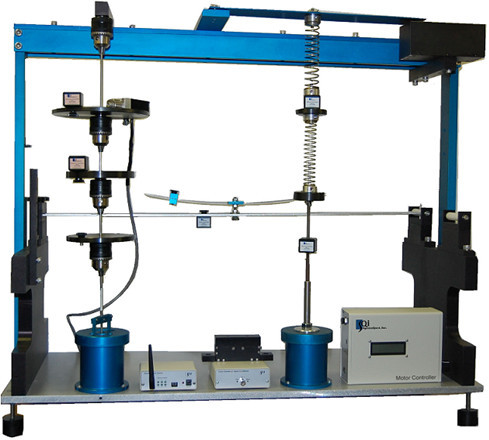
Tell us about your requirement

Price:
Quantity
Select Unit
- 50
- 100
- 200
- 250
- 500
- 1000+
Additional detail
Mobile number
Email

More Products in Dynamics Lab Equipment Category
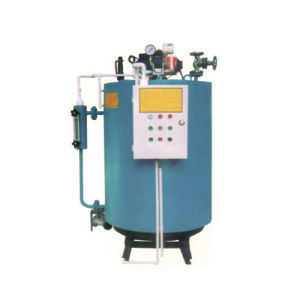
Steam Boiler With Turbine Setup
Price 120000 INR / Piece
Minimum Order Quantity : 1 Piece
Material : Mild Steel
Usage : Laboratory
Color : Green White
Voltage : 220 380 Volt (v)
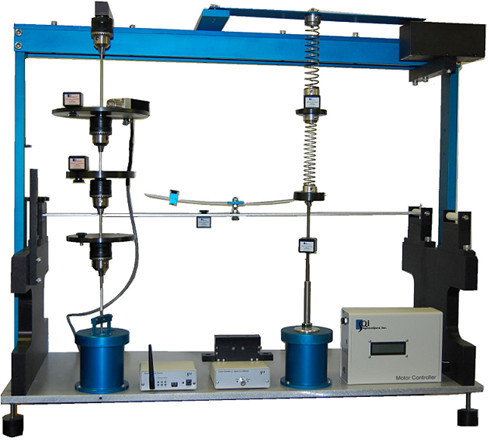
Dynamics Lab Equipment
Price 32000 INR / Piece
Minimum Order Quantity : 1 Piece
Material : Metal
Usage : Laboratory
Color : Blue Black
Voltage : 220 Volt (v)
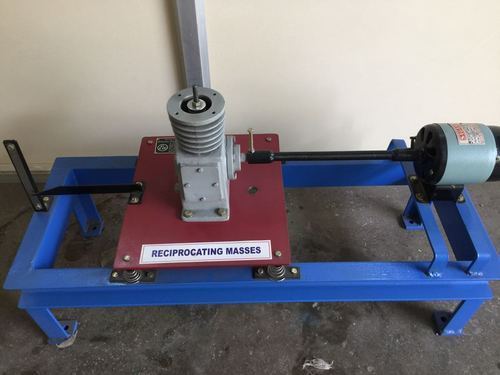
Dynamic Lab Equipments
Price 25000 INR / Piece
Minimum Order Quantity : 1 Piece
Material : Mild Steel
Usage : Laboratory
Color : Blue Grey
Voltage : 230 Volt (v)
Non IBR Boiler Test Rig
Price 450000.00 INR / Piece
Minimum Order Quantity : 1 Piece
Material : Mild Steel
Usage : Laboratory
Color : Blue
Voltage : 220 380 Volt (v)

Contact Details
GST : 33AYHPP7230N1Z2
- New No:243/2, Old No:203/2, Periyar Paathai, Chennai - 600094, Tamil Nadu, India
- Phone :08071779477

 Send Inquiry
Developed and Managed by Infocom Network Private Limited.
