
Call: 08071779477
 Send Inquiry

 Send Inquiry
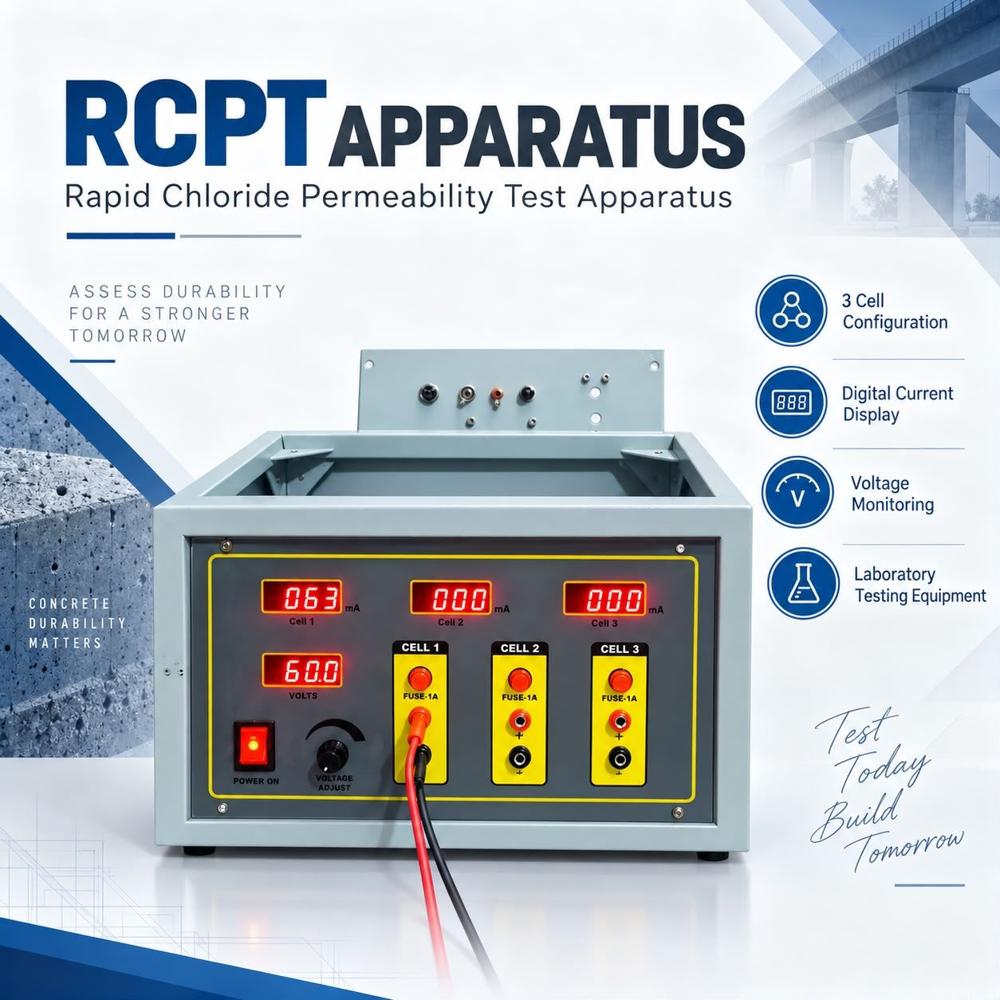
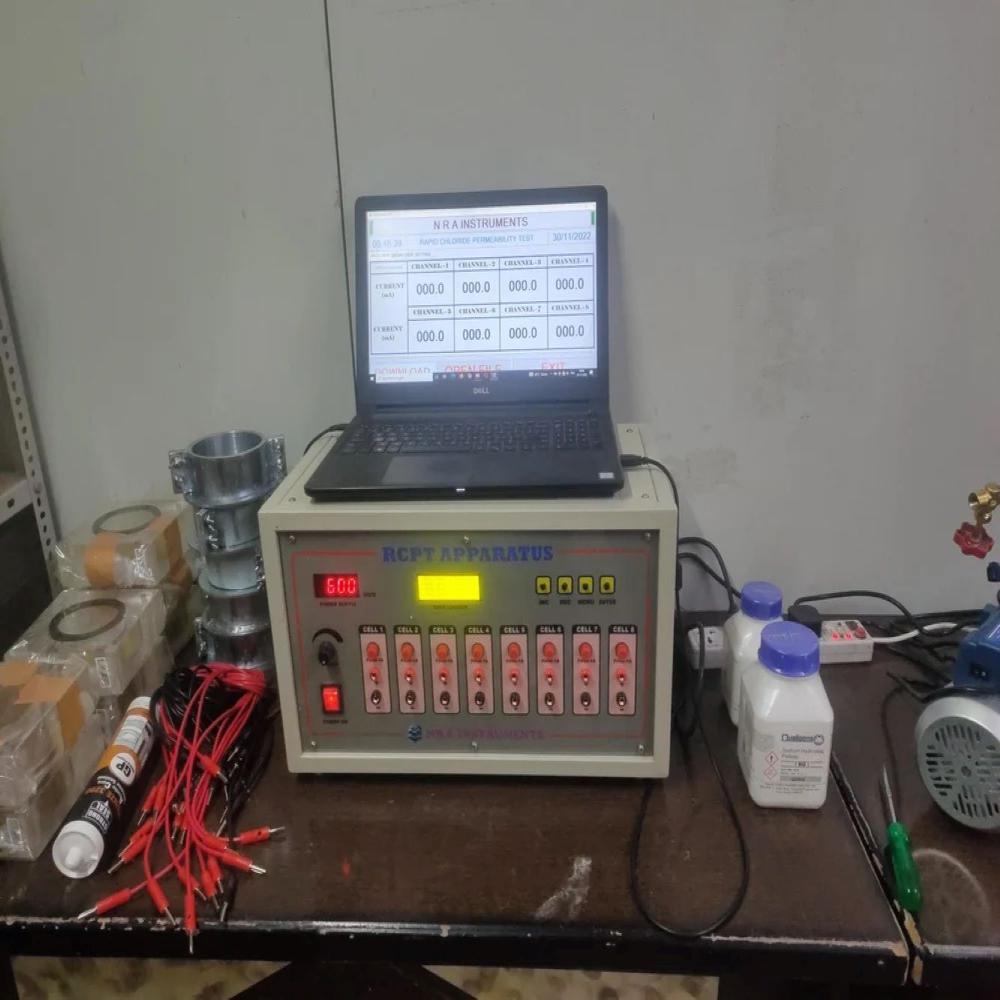
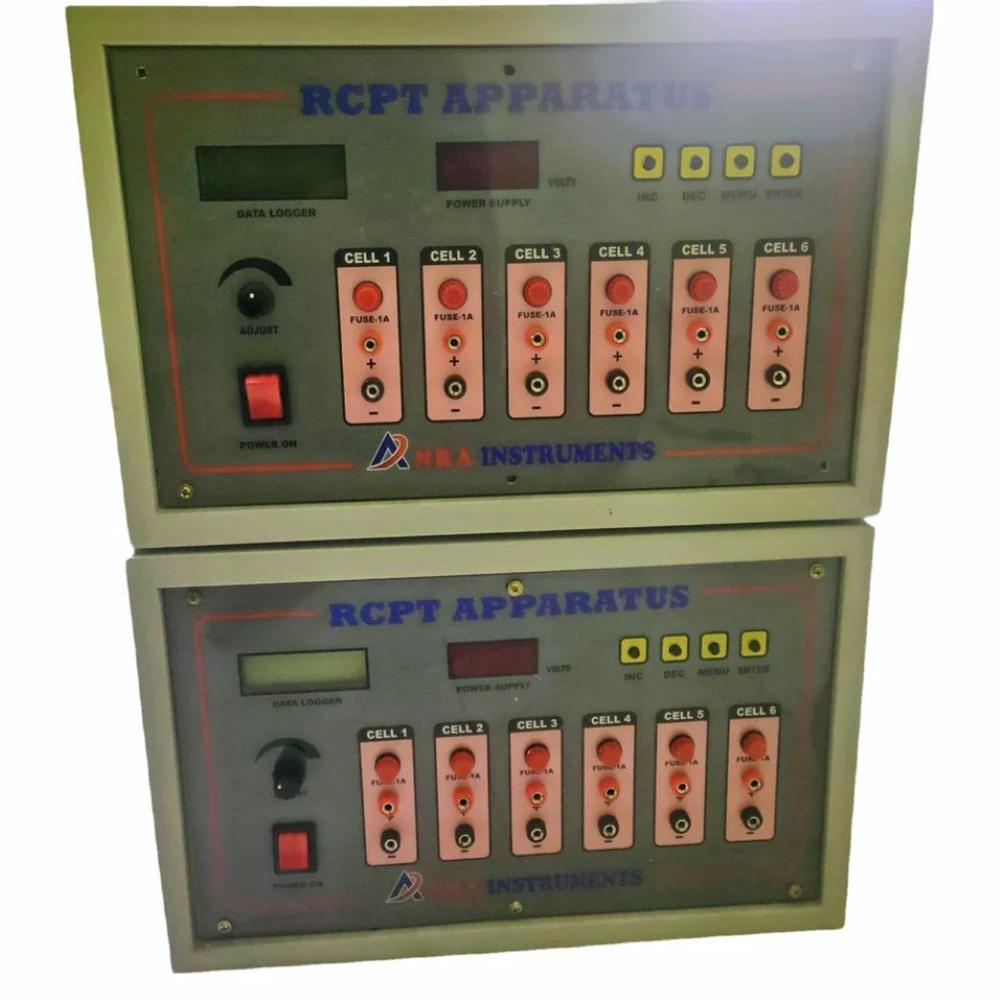
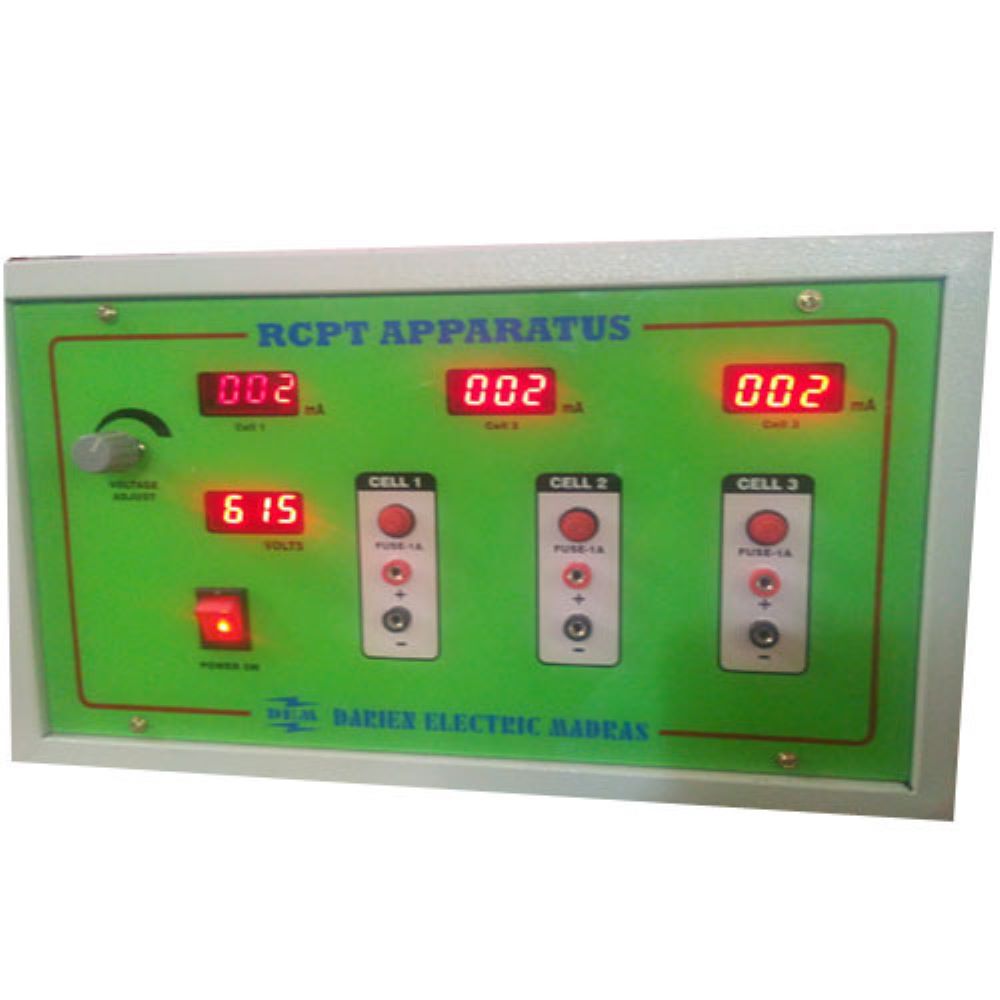
Rapid Chloride Permeability Tester
Price 125000.0 INR/ Piece
MOQ : 1 Piece
Rapid Chloride Permeability Tester Specification
- Color
- Green
- Language
- English
- Usage
- Concrete Test
- Material
- Metal
- Power Supply
- Electric
- Power Consumption
- 230 Volt-Ampere (VA)
- Product Type
- Testing
- Weight
- 20 Kilograms (kg)
About Rapid Chloride Permeability Tester
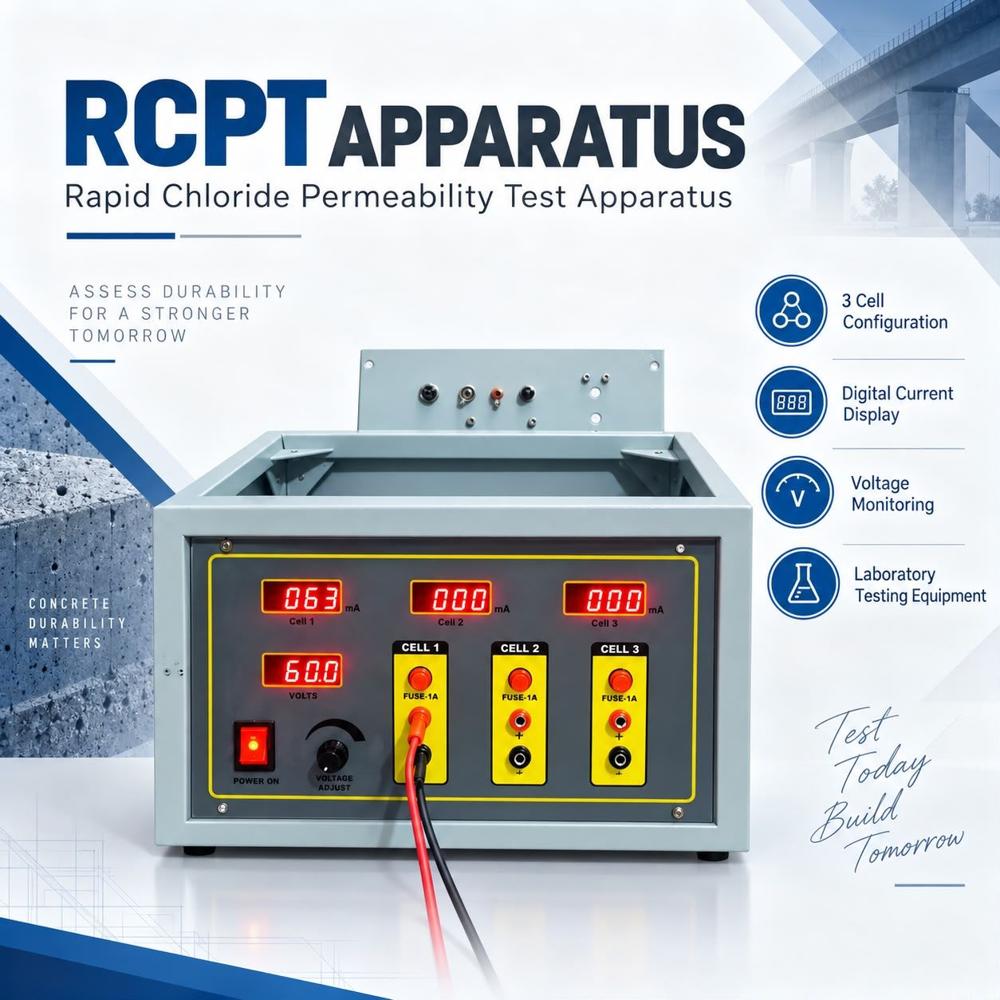
Each RCPT cell will be made up of transparent acrylic material of 150 * 150mm* 50mm thick as per ASTMC 1202 It will hold the concrete specimen of 100mm diameter 50mm thick It will be provided with rubber gasket and washers for achieving leak proof Stainless steel bolts with washers and nuts will be provided to hold the specimen rigidly The power supply will be applied to each cell through banana sockets and the current will be distributed through the brass mesh Each cell will be provided with openings in top for pouring chemicals and the temperature sensors. The openings can be closed with lids The volume of chemicals within the chamber shall be 250mlEfficient Chloride Penetration Assessment
Accurately determine concrete's resistance to chloride ion infiltration using this rapid testing device. The tester supports quick yet reliable results, facilitating improved decision-making in materials engineering and construction quality control.
User-Friendly and Durable Design
The tester is built with sturdy metal, finished in a distinct green color, and weighs 20 kilograms. Its electric operation at 230 VA ensures smooth, consistent functionality. Engineered for both laboratory and field applications, it suits a wide array of professionals in the concrete industry.
FAQ's of Rapid Chloride Permeability Tester:
Q: How is the Rapid Chloride Permeability Tester used in concrete testing?
A: This tester measures the rate at which chloride ions pass through a concrete sample, providing vital data on the material's durability and resistance to corrosion. Place the sample in the tester, connect it to the electric supply, and follow standard test procedures for reliable results.Q: What are the main benefits of using this permeability tester?
A: Using this tester allows for quick, accurate assessments of concrete's chloride permeability, aiding in the prediction of service life and prevention of structural damage due to chloride ingress. The device saves time and improves the reliability of quality control processes.Q: Where can this tester be deployed for optimal results?
A: The Rapid Chloride Permeability Tester can be used both in laboratories and on construction sites. It's suitable for quality assurance, academic research, and pre-qualification of construction materials wherever concrete durability is a primary concern.Q: When should you perform a chloride permeability test on concrete?
A: Conduct this test during product development, after casting, or as part of routine quality control, especially in projects exposed to harsh conditions such as marine environments or areas using de-icing salts.Q: What is the testing process with this equipment?
A: A concrete sample is prepared and placed in the testing chamber. The tester applies an electric current, and the movement of chloride ions is measured over a set period, allowing for the evaluation of permeability according to established standards.Q: What power requirements are necessary for operating this tester?
A: The device requires an electric supply of 230 Volt-Ampere (VA) for optimal operation. Ensure a compatible power source is available for uninterrupted testing.Q: How does using this tester improve construction quality?
A: By identifying concrete mixtures with low chloride permeability, the device helps in selecting materials that enhance the structure's longevity, reducing maintenance costs and increasing safety over time.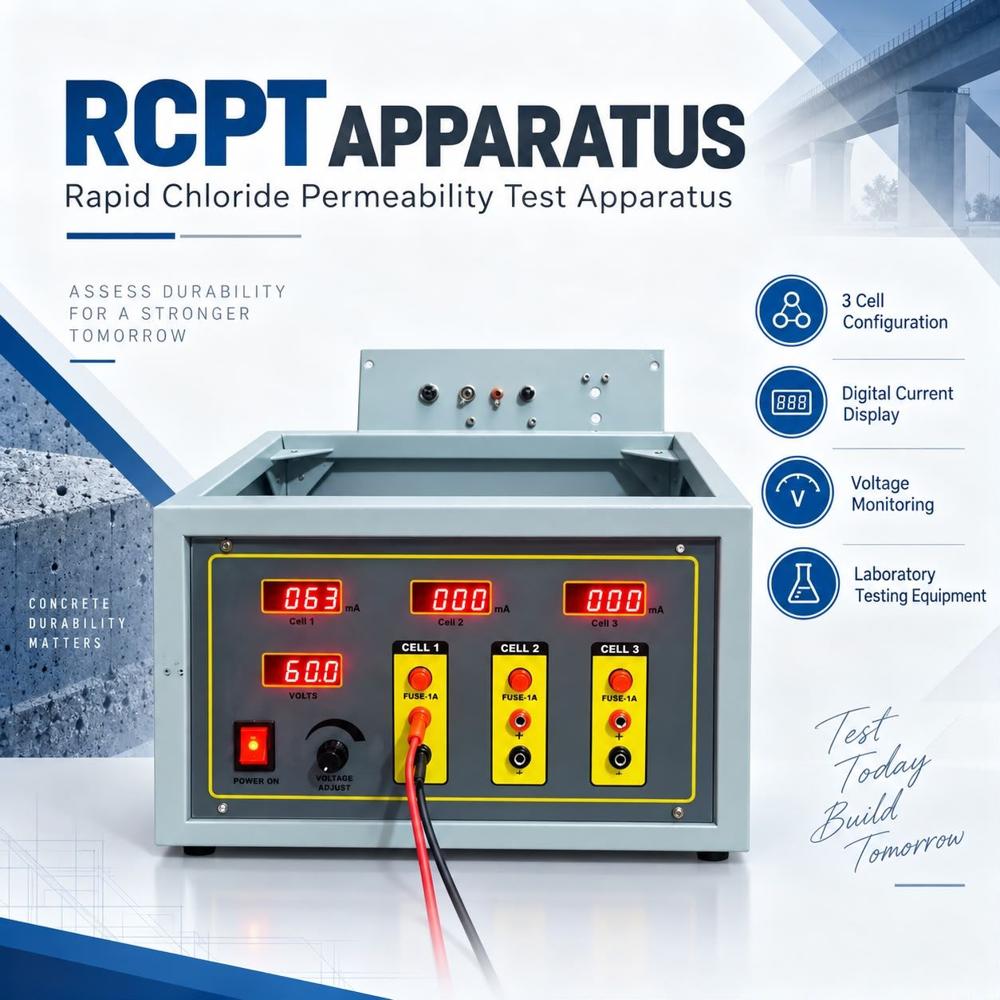
Tell us about your requirement

Price:
Quantity
Select Unit
- 50
- 100
- 200
- 250
- 500
- 1000+
Additional detail
Mobile number
Email

More Products in Measuring and Testing Equipment for QC Lab Category

Hot Air Oven
Price 10000.0 INR / Piece
Minimum Order Quantity : 1 Piece
Color : Blue
Material : Aluminum
Usage : Laboratory
Power Supply : Electric
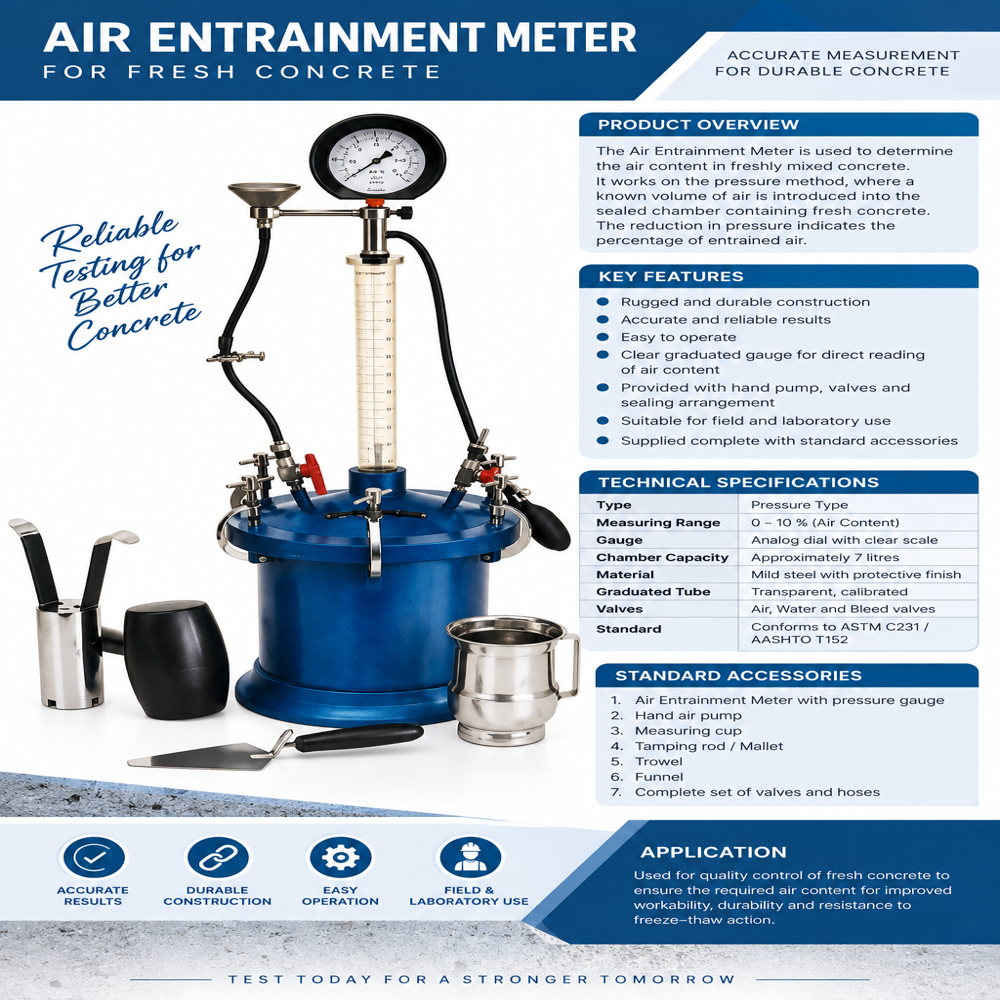
Air Entrainment Meter
Price 22500 INR / Piece
Minimum Order Quantity : 1 Piece
Color : Blue
Material : Metal
Usage : Concrete Test
Power Supply : Electric

Accelerated Curing Tank
Price 50000.00 INR / Piece
Minimum Order Quantity : 1 Piece
Color : Blue
Material : Stainless Steel
Usage : indusrary
Power Supply : Electric

China Clay Dish
Price 50.00 INR / Piece
Minimum Order Quantity : 1 Piece
Color : White
Material : Highgrade Porcelain
Power Supply : Manual

Contact Details
GST : 33AYHPP7230N1Z2
- New No:243/2, Old No:203/2, Periyar Paathai, Chennai - 600094, Tamil Nadu, India
- Phone :08071779477

 Send Inquiry

Developed and Managed by Infocom Network Private Limited.
