
Call: 08071779477
 Send Inquiry
 Send Inquiry
Double Beam UV - VIS Spectrophotometer
Price 175000 INR/ Piece
MOQ : 1 Piece
Double Beam UV - VIS Spectrophotometer Specification
- Measurement Range
- 190 nm to 1100 nm
- Accuracy
- ±0.3 nm
- Power Source
- AC Mains
- Voltage
- 220 V
- Automation Grade
- Semi-automatic
- Capacity
- 2 ml to 5 ml (Standard Cuvette)
- Feature
- Wavelength scanning, quantitative analysis, photometric measurement
- Frequency
- 50 Hz
- Model No
- UV-1900S
- Core Components
- Light Source, Monochromator, Detector, Sample and Reference Compartment
- Usage
- Laboratory
- Temperature Range
- 0°C to 50°C
- Equipment Materials
- Metallic body with chemical resistant epoxy coating
- Type
- Double Beam UV-VIS Spectrophotometer
- Display Type
- Digital
- Dimension (L*W*H)
- 460 x 370 x 220 mm
- Weight
- Approximately 18 kg
- Pathlength
- 10 mm (standard cuvette supplied)
- Data Output Port
- USB and RS232
- Stray Light
- 0.05%T at 220 nm & 360 nm
- Interface
- Large LCD and Software connectivity
- Baseline Flatness
- 0.001A
- Detector
- Silicon Photodiode
- Photometric Range
- -0.3 ~ 3A, 0~200%T, 0~9999C
- Wavelength Repeatability
- 0.2 nm
- Lamp Source
- Deuterium and Tungsten lamps
- Spectral Bandwidth
- 1 nm
- Stability
- 0.002A/hr at 500 nm
Double Beam UV - VIS Spectrophotometer Trade Information
- Minimum Order Quantity
- 1 Piece
- FOB Port
- Chennai
- Delivery Time
- 1 Week
- Main Domestic Market
- Chandigarh, Himachal Pradesh, Uttarakhand, Daman and Diu, Dadra and Nagar Haveli, South India, North India, East India, West India, Andaman and Nicobar Islands, Andhra Pradesh, Assam, Arunachal Pradesh, Bihar, Goa, Jammu and Kashmir, Jharkhand, Karnataka, Kerala, Madhya Pradesh, Maharashtra, Mizoram, Meghalaya, Manipur, Nagaland, Pondicherry, Rajasthan, Sikkim, Tamil Nadu, Telangana, Tripura, West Bengal, Lakshadweep, All India, Haryana, Delhi, Gujarat, Punjab, Central India, Odisha, Chhattisgarh, Uttar Pradesh
Double Beam UV - VIS Spectrophotometer About
Double Beam Spectrophotometer (UV Visible)
A UV-Vis spectrophotometer is used to determine the absorption of light from a sample and can be used as a detector for HPLC. A sample is placed in the UV/VIS beam and absorbance versus wavelength is measured. A double beam spectrophotometer utilizes two beams of light: a reference beam and a sampling beam that passes through the sample. Some double beam spectrophotometers have two detectors that allow the two beams to be measured at one time.
A UV-Vis spectrophotometer is used to determine the absorption of light from a sample and can be used as a detector for HPLC. A sample is placed in the UV/VIS beam and absorbance versus wavelength is measured. A double beam spectrophotometer utilizes two beams of light: a reference beam and a sampling beam that passes through the sample. Some double beam spectrophotometers have two detectors that allow the two beams to be measured at one time.
Precision and Reliability for Laboratory Analysis
This spectrophotometer, with double beam optics and a chemically resistant epoxy-coated body, delivers accurate and reproducible results. Highly stable electronic baseline, broad photometric range, and sophisticated scanning capabilities make it suitable for quantitative and qualitative assays in research, education, pharmaceutical, and quality control laboratories.
User-Friendly Interface and Connectivity
The UV-1900S provides a large digital LCD display and is compatible with specialized software for easy data management. Its USB and RS232 output ports ensure convenient data export, facilitating integration with laboratory information systems and enhancing workflow efficiency.
FAQs of Double Beam UV - VIS Spectrophotometer:
Q: How does the double beam design benefit laboratory measurements?
A: The double beam design allows simultaneous measurement of sample and reference, reducing background noise and drift, thereby improving the accuracy and repeatability of photometric and wavelength readings.Q: What is the process for wavelength scanning with this spectrophotometer?
A: Wavelength scanning is performed through the software or LCD interface, allowing users to set scan parameters. The system automatically records absorbance or transmittance across the specified wavelength range, facilitating spectral analysis.Q: When should I replace the Deuterium or Tungsten lamp?
A: Lamp replacement is typically needed when the instrument indicates significant decreases in intensity or unstable output. Its advisable to monitor lamp usage and refer to the maintenance guidelines for expected lamp lifespan and replacement timing.Q: What types of samples can be analyzed using this instrument?
A: This spectrophotometer accommodates liquid samples in standard 10 mm cuvettes (2 ml to 5 ml), suitable for a wide range of chemical, biological, and pharmaceutical analyses within its measurement range of 190 nm to 1100 nm.Q: Where can data generated by the instrument be exported?
A: Data can be shifted directly to computers or printers via USB and RS232 ports. This enables users to archive, analyze, and share results efficiently, integrating seamlessly with laboratory record keeping.Q: How stable is the spectrophotometer for long-term measurements?
A: The UV-1900S offers high stability, with a drift of only 0.002A/hr at 500 nm, ensuring reliable and consistent measurement results even during extended analytical sessions.Q: What are the main benefits of using this model in a laboratory setting?
A: The key advantages include superior wavelength accuracy, advanced scanning and quantitative analysis capabilities, robust construction for chemical resistance, easy-to-use interface, and versatile connectivity options, making it an all-in-one solution for routine and sophisticated analyses.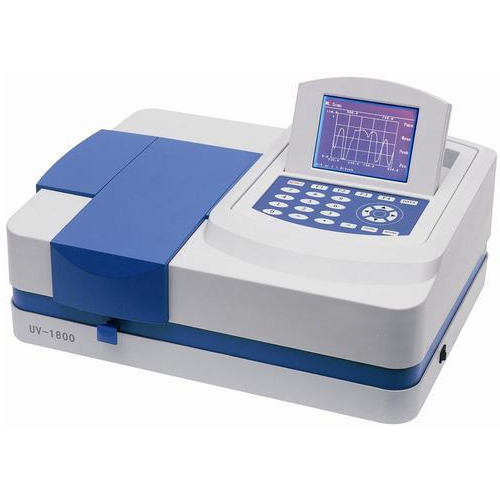
Tell us about your requirement

Price:
Quantity
Select Unit
- 50
- 100
- 200
- 250
- 500
- 1000+
Additional detail
Mobile number
Email

More Products in Water Testing Equipment Category
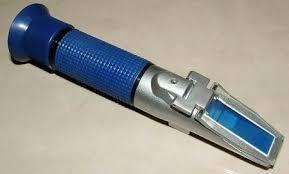
Salinity Meter
Price 2750 INR / Piece
Minimum Order Quantity : 1 Piece
Usage : Laboratory
Display Type : Digital
Power Source : 2 x AAA Battery
Frequency : 50/60 Hz
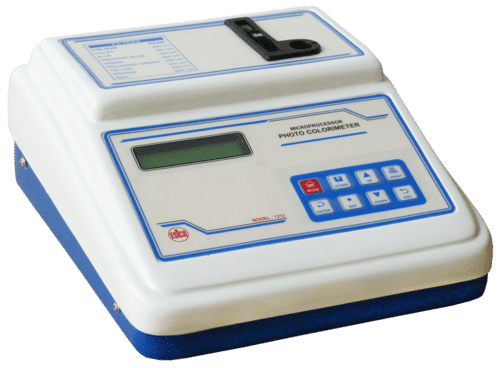
Photo Colorimeter
Price 6000 INR / Piece
Minimum Order Quantity : 1 Piece
Usage : Laboratory
Display Type : Digital
Power Source : Electric
Frequency : 50 Hz
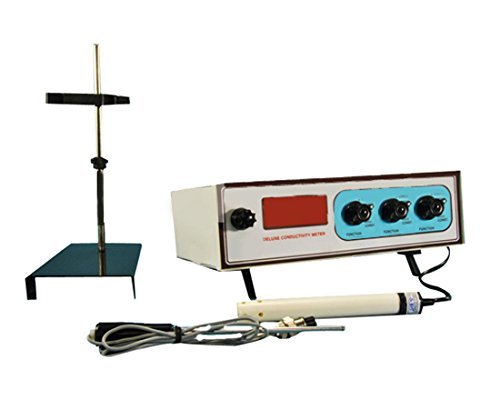
Dissolved Oxygen Meter
Price 7500 INR / Piece
Minimum Order Quantity : 1 Piece
Usage : Laboratory
Display Type : Digital
Power Source : Electric
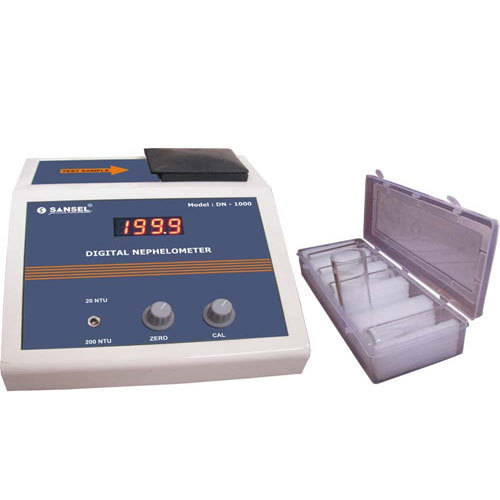
Turbidity Meter
Price 5000.00 INR / Piece
Minimum Order Quantity : 1 Piece
Usage : Laboratory
Display Type : Digital
Power Source : electric
Frequency : 50 Hertz (HZ)

Contact Details
GST : 33AYHPP7230N1Z2
- New No:243/2, Old No:203/2, Periyar Paathai, Chennai - 600094, Tamil Nadu, India
- Phone :08071779477

 Send Inquiry
Developed and Managed by Infocom Network Private Limited.
